Delete a customer

CustomersUpdated 20 Sep 20262 min read

This article explains how to delete a customer from Workshop Software, including what to do first if they have vehicles or transactions attached to their profile.

Please note: You are able to delete a customer our of Workshop Software provided you HAVE NOT created any invoices for that customer, as soon as an invoice has been finalised/processed the customer can no longer be deleted.

If the customer you are wanting to delete has a vehicle attached to them you will first need to either delete the vehicle from Workshop Software or move the vehicle to a different owner, please see the guide on deleting vehicles and also transferring vehicle ownership.

1. Search for the customer by typing their name in the main search bar in Workshop Software, located at the top of the page. Then double click on the correct search result.
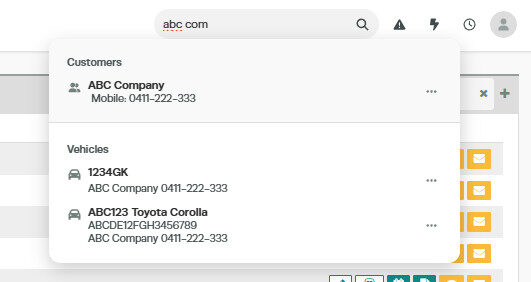
Workshop Software screen showing then double click on the correct search result

2. Click on the red 'Delete' button located at the bottom left corner of the customer details.
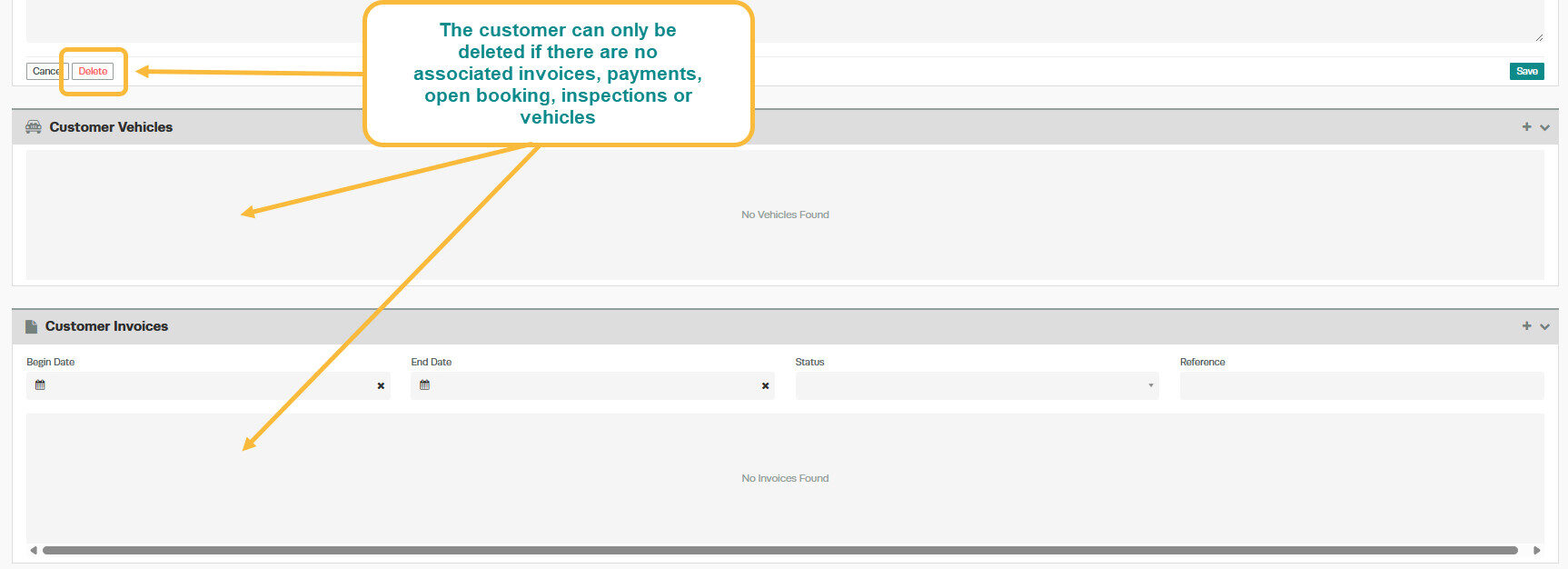
Please note: you will only be able to delete the customer if they have no vehicles or invoices attached to them
Workshop Software screen showing you will only be able to delete the customer if they have no vehicles or invo...

3. Click on the 'Yes' button to confirm that you want to delete the customer:
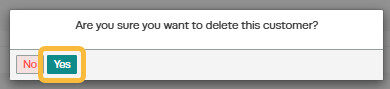
Workshop Software delete a customer showing 'yes' button to confirm that you want to delete the customer

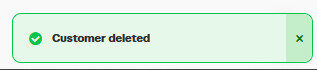
4. The customer is now deleted.

Workshop Software screen showing the customer is now deleted

Good to Know

  • You can search for a customer by name, phone number, or email address using the search bar.
  • This setting can be toggled on or off at any time. The change takes effect immediately once you click Save.

Frequently Asked Questions

Will this change affect existing invoices for this customer?

Changes to customer details (such as name, address, or contact information) apply to future invoices. Existing completed invoices retain the details that were on the invoice at the time it was created.

Also Explore

Was this article helpful?