Skip to content
A product in Workshop Software is anything you put on an invoice: a part, a labour line, a sublet, a consumable, a tyre. You can add one from the Products page when you are setting up or restocking, or on the spot from inside an invoice or supplier order when a job needs something you have never sold before. This guide covers both routes and then explains every field on the product screen so you know which ones are worth filling in.
Please note: The only field a product needs is an Item Code. Everything else can be added later. That said, a product with a description, retail price and cost is far more useful, because those three fields drive search, invoicing and your margin reports.
Add a product from the Products page
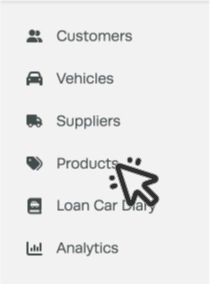
- In the left-hand sidebar, click Products.
- Click the + at the right of the product filter bar.

- Enter an Item Code and as many of the other fields as you have to hand, then click Save. The field reference below explains each one.
Add a product from inside an invoice or order
This works in a customer invoice, a supplier stock order or a supplier invoice.
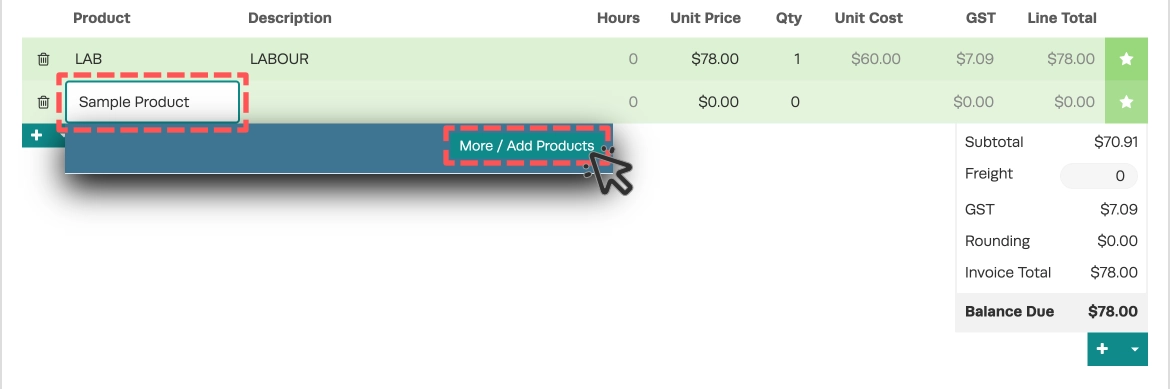
- In the product list, click + to add a line, type a new, unused item code in the Product field and click More / Add Products.
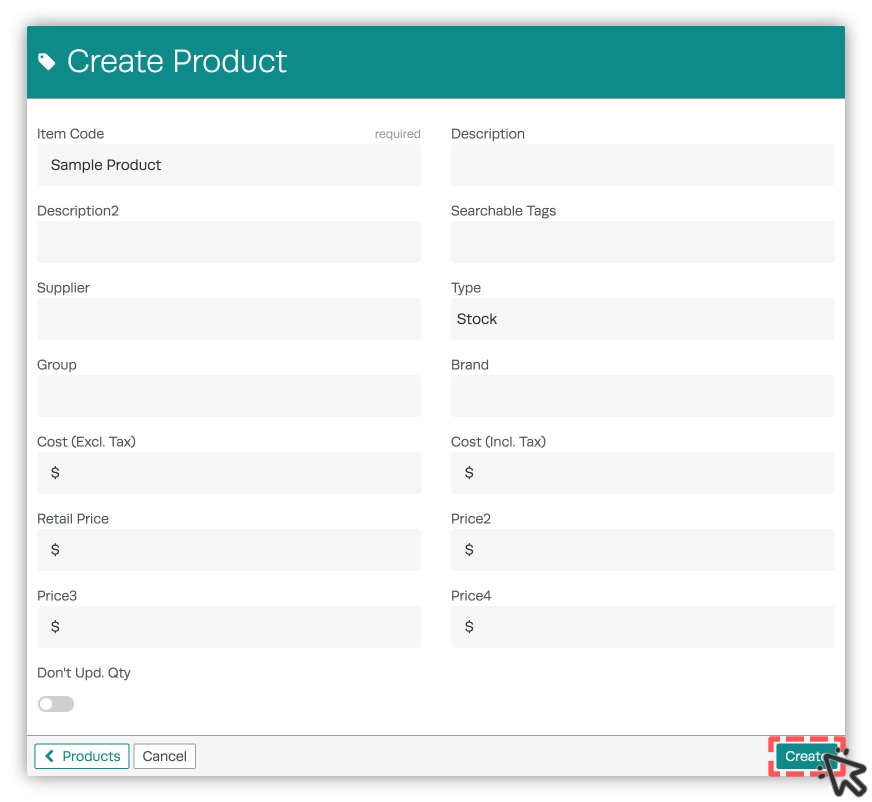
- In the Create Product box, the Item Code is already filled in. Add a Description, Retail Price and Cost at minimum.
- Click Create. The product is added to the invoice and saved to your product list. Open it from the Products page later to fill in stock levels, supplier and anything else.
Product field reference
Description
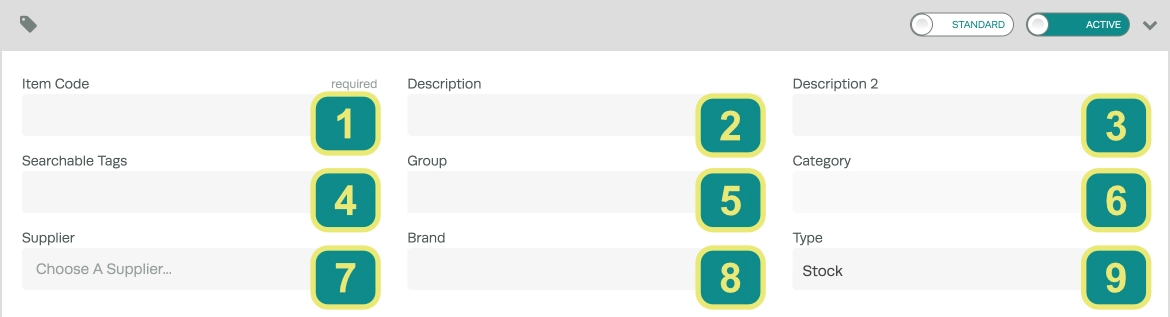
| Field | What it does |
|---|---|
| 1. Item Code | The only required field. Usually your internal or supplier part number. Searchable. You can hide it from invoices in Company Settings. |
| 2. Description | Prints on the customer's invoice. Searchable. |
| 3. Description 2 | Internal only, never shown to the customer. Searchable. |
| 4. Searchable Tags | Extra search terms: alternative supplier codes, a barcode, a common name. |
| 5. Group | Defined in Settings > Company Lists. Groups filter reports and stocktakes, feed price matrices, and can map sales to an account in your accounting integration. |
| 6. Category | Sits under the Group, also from Company Lists. Lets you set tax-free or custom tax rates for a range and filter reports. |
| 7. Supplier | Links the product to a supplier in your supplier list. |
| 8. Brand | For sorting and filtering reports. |
| 9. Type | Stock, Labour, Sublet, Consumable, Accessory or Tyre. Choosing Labour or Tyre reveals the extra fields at the end of this list. |
Stock
| Field | What it does |
|---|---|
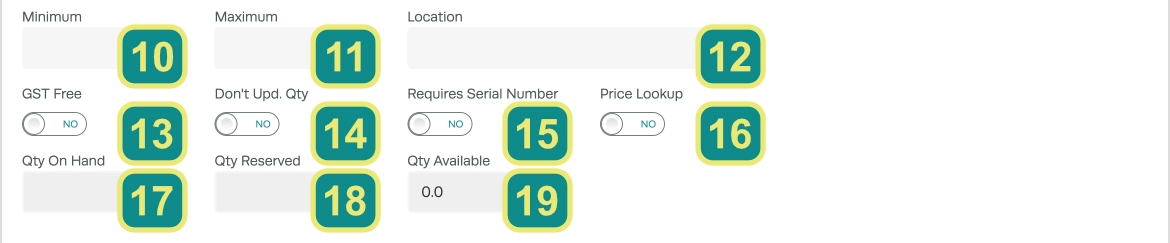
| 10. Minimum | The least you want on hand. Auto Create in a supplier stock order looks for products below this figure. |
| 11. Maximum | The level Auto Create restocks up to. |
| 12. Location | Shelf, bay or storeroom reference. |
| 13. GST Free | Set to Yes for products that do not attract GST. Prices on invoices and supplier invoices will not include it. |
| 14. Don't Upd. Qty | Set to Yes to stop quantity tracking. Use it for general consumables or bulk fluids you reorder by eye, such as oil from a drum. |
| 15. Require Serial Number | Tracks a serial number for every unit. See product serial numbers. |
| 16. Price Lookup | Set to Yes and the product is only found when the full Item Code is typed into the product search. |
| 17. Qty On Hand | Units in stock. |
| 18. Qty Reserved | Units allocated to invoices not yet processed. Only shown when Reserved Stock is on in Company Settings. |
| 19. Qty Available | On Hand minus Reserved. Also depends on the Reserved Stock setting. |
Price
| Field | What it does |
|---|---|
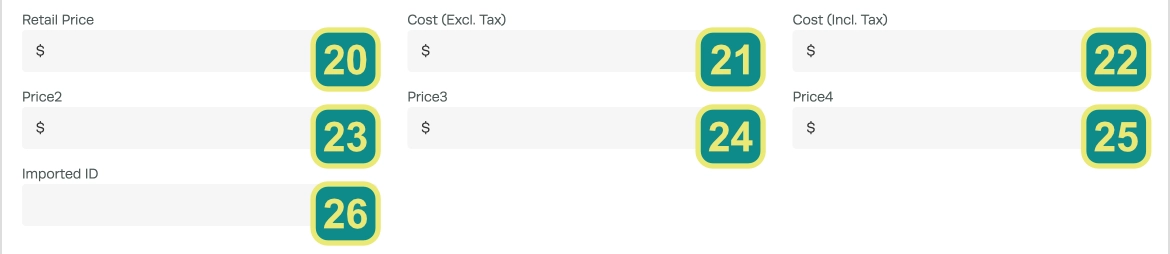
| 20. Retail Price | What you charge the customer. |
| 21 and 22. Cost (Excl. Tax) and Cost (Incl. Tax) | What you pay. Enter either one and the other fills in. |
| 23 to 25. Price 2, 3 and 4 | Alternative retail prices, for example a trade rate. Assign one to a customer in their Customer Details and it is used automatically on their invoices. |
| 26. Imported ID | The product's identifier in a system you imported from. Filled by the import; you rarely need to touch it. |
Comments
| Field | What it does |
|---|---|
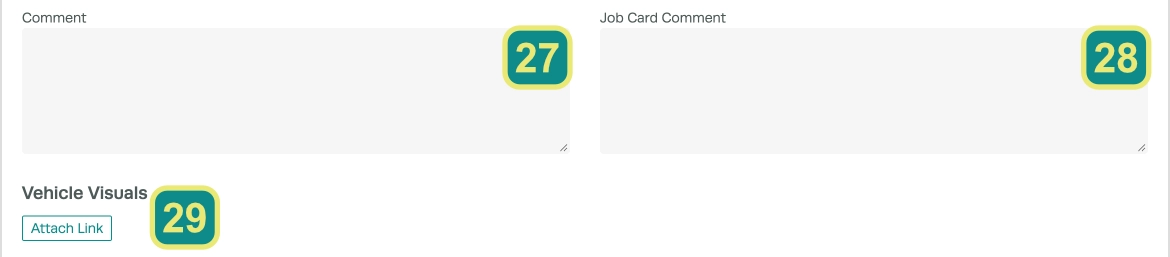
| 27. Comment | Prints under the product line on the invoice. The customer sees it. |
| 28. Job Card Comment | Prints under the product line on the job card only. The customer does not see it. |
| 29. Vehicle Visuals | Only shown when the Vehicle Visuals integration is active. Pick a video that explains this repair and it is attached to every invoice that includes the product. |
Labour products only

| Field | What it does |
|---|---|
| 30. Default Labour Qty | Pre-fills the quantity when the product is added to an invoice. Handy for fixed operations such as a wheel balance. |
| 31. Service | Set to Yes and processing an invoice with this line updates the vehicle's Next Service date, using the Service Interval from Company Settings. This is what drives service reminders. |
Tyre products only

| Field | What it does |
|---|---|
| 32 to 34. Tyre Width, Tyre Profile, Wheel Size | The width, profile and wheel size specification of the tyre. |
Frequently Asked Questions
Which Type should I pick?
Choosing Labour or Tyre reveals extra fields, as shown above. For guidance on when to use the Sublet and MISC types, see best practice use of MISC and Sublet product types.
How do I give trade customers a different price?
Enter the trade price in Price 2 (or 3 or 4), then open the customer's details and set their price level to match. Their invoices pick it up automatically.
How do I stop tracking stock levels for a product?
Set Don't Upd. Qty to Yes. Qty On Hand will no longer change when the product is bought or sold. This is intended for general consumables and bulk fluids that you reorder by hand.
Can I add products in bulk?
Yes. Use the product import template. See How to import data.
Related Articles
- How to import data
- How to bulk update product price list
- Best practice use of MISC and Sublet product types
- Product serial numbers